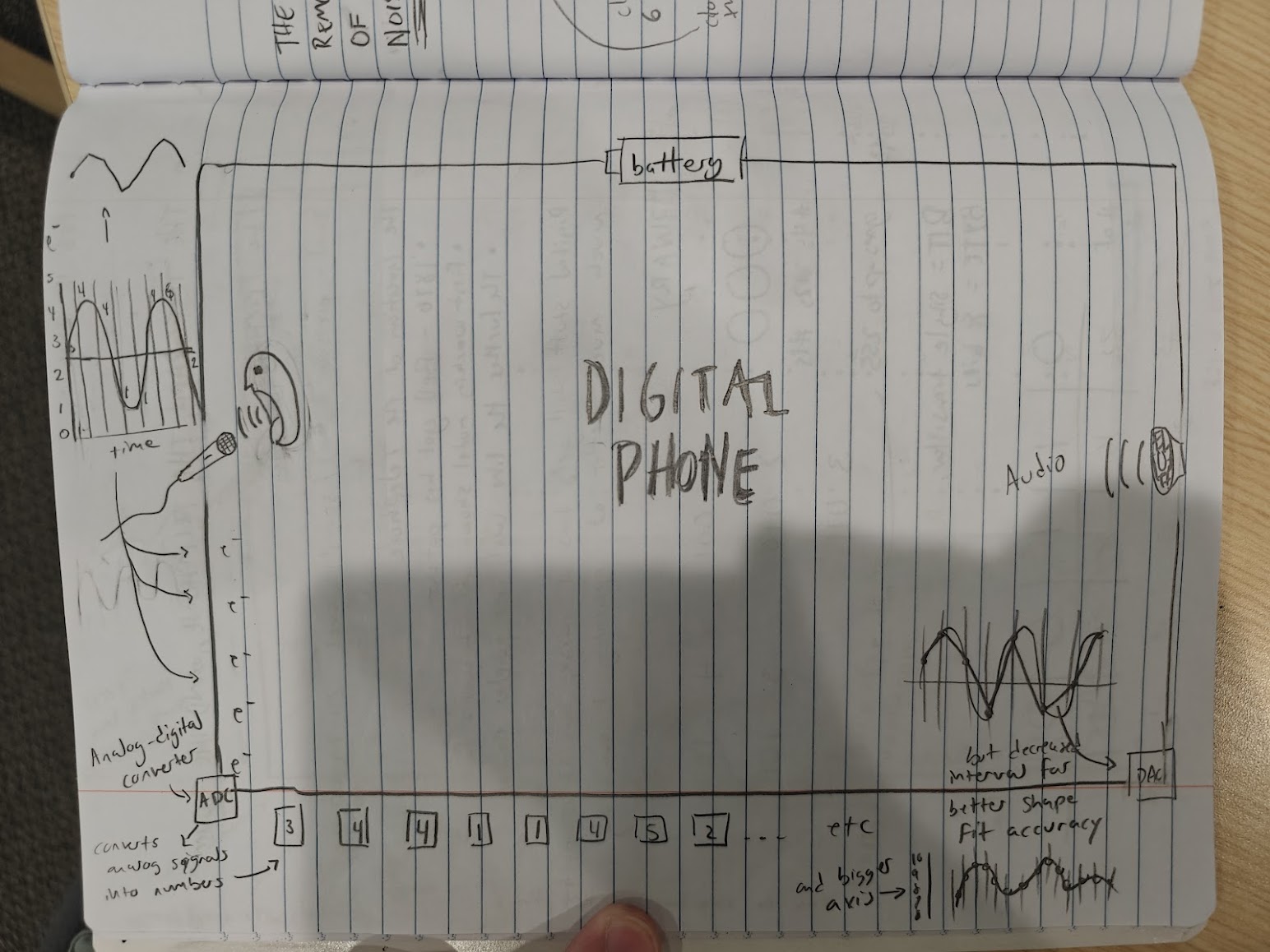
Our foundational technologies didn’t start out digital. They became digital from an analog system. Here, I will show you an illustrated representation of how the telephone became digital.

Beginning with an energy source and a wire, an analog phone then receives an audio signal though a microphone. This translates to electrons flowing through the wire based on the the pitch of the sound. These electrons then travel through the wire. But since the signal will fade over time, the electrons travel through analog amplifiers to boost the electron flow. However, loose electrons from exterior electricity will also hop on this wire and get amplified, leading to a ton of noise when the electrons eventually reach the speaker. There is no way to distinguish authentic electrons from noise electrons. It’s just a mess.
Here we have a digital representation of a phone. You begin the same way by speaking into a microphone and creating electron flow, but this time, there is something called an analog-digital converter. This device reads the electrons and assigns them numbers based on the pitch of the sound. These numbers are then interpreted by the device at small time intervals to create a cleaner sound. This device is able to tell authentic and noise electrons apart, and it can remove the noise electrons, leading to a clean, clear sound coming out of the speaker.