There are a ton of different technologies, people, and factors that contributed to how the world we know today came to be. But today I want to talk about a few of the major technologies that brought us to what we have now. Them being the Jacquard Loom, the Telegraph, and the Telephone.
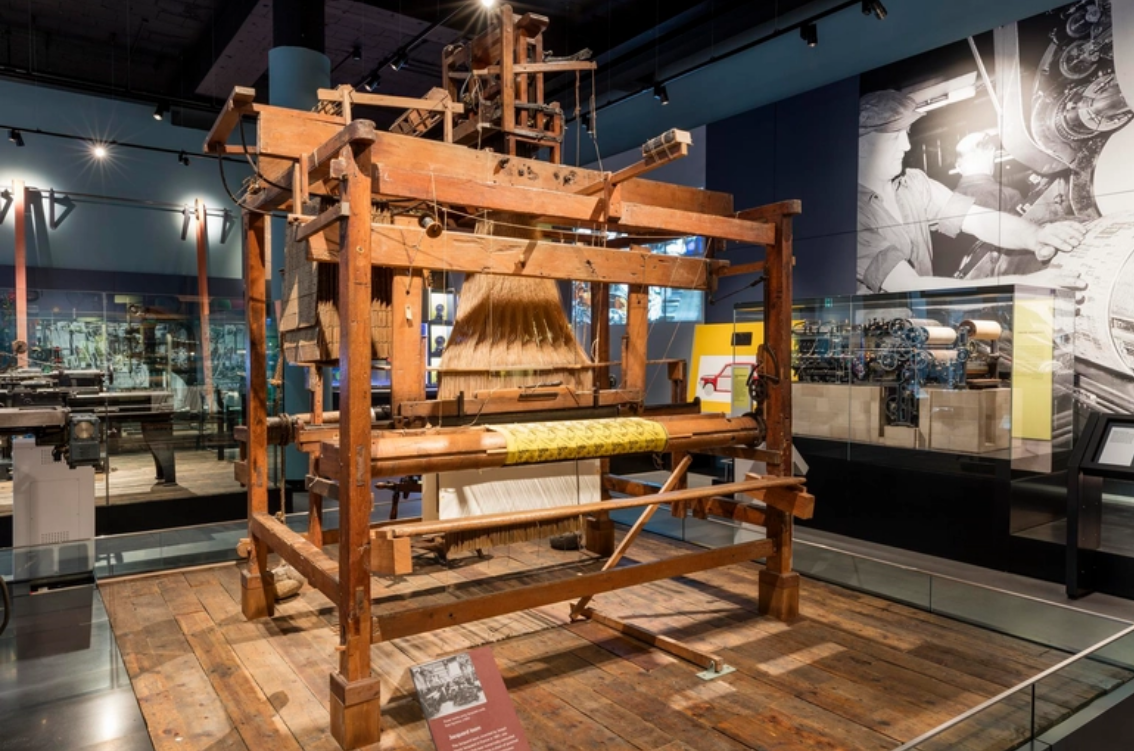
The Jacquard Loom was invented in Lyon at the end of the 18th century by a man named Joseph Marie Jacquard. It was a revolutionary technology for its time, and is considered a foundational precursor to the computers of today. Not because it was good at math, but because it could be programmed. The Jacquard loom was able to use wooden punchcards (pictured on the right) to set patterns while weaving. The holes and solid parts of the card could be read by the loom and set the warp strings a certain way for different patterns. Traditional looms were all about simple symmetry, and complex patterns were difficult to make and were very endlessly time consuming. The Jacquard loom was the first loom that could change the design without having to be disassembled and rebuilt. The punchcards opened up a whole new world of creativity and accessibility in weaving. Provided you had enough punchcards, you could transcribe or represent whatever you wanted.

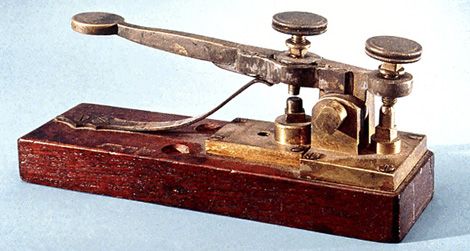
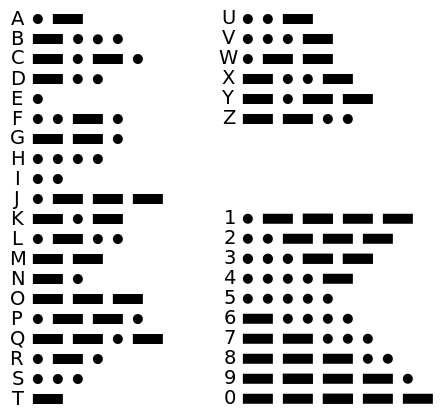
We move now to New Jersey, in the 1750s. A man named Samuel Morse had lost his wife. He was not able to make it to her in time to say goodbye. Frustrated by his loss and the lack of technology to enable quick, distant communication, he got to work. He invented his first experimental telegraph in 1753. Each letter of the telegraph was bound to its own wire. Then, in 1825, the electromagnet was invented. An electrical pulse would trigger the magnet and it could be measured and used. The electromagnet was able to receive signals from Morse’s telegraph. But the system was inefficient and did not work very well. This brings us to the iconic and still-used Morse Code, which was invented in 1836 by Morse and two other men named Alfred Vail and Joseph Henry. This code is a series of dots and dashes that represent each letter and can be transcribed in many mediums to convey the alphabet. By 1838, with this code, and the developing electromagnet technology, messages could be sent quickly over long distances through a single wire. This was the Telegraph.
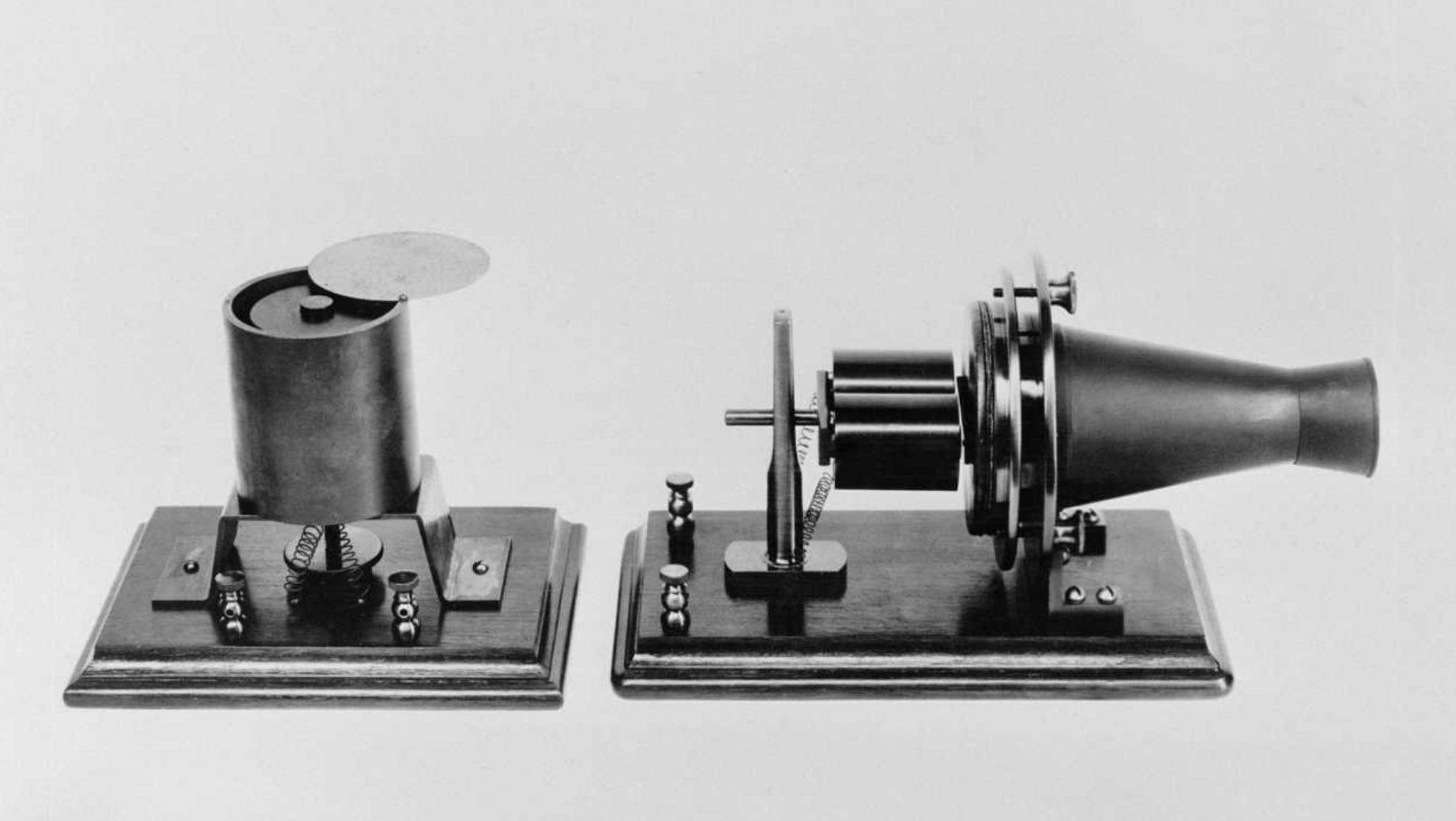
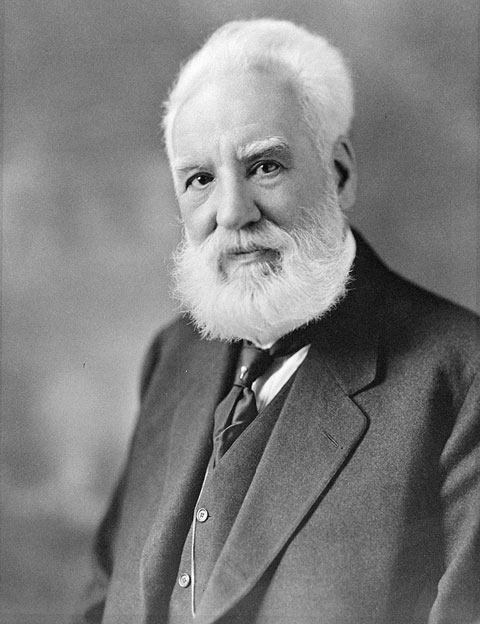
The final major technology that leads up into the modern world is the Telephone. It was invented by Alexander Graham Bell in the 1870s. He got his patent for it in 1876. The telephone was able to take a wire and transfer sound waves in the form of electrons over the wire. Sound was quieter the further it went, so amplifiers were used to boost the sound. But, the original telephone was an analog technology, and was very, VERY, susceptible to noise. Electrons from outside electrical sources would leak onto the wires and get boosted with the real electrons from the voice input, leading to the sound coming from the speaker on the other end of the phone to sound like a radio transmission from the moon. It was very challenging to understand messages, and it was very expensive to use a phone. Early phone calls were quick, and left users trusting that the tech worked and that the other person could hear their message. The telephone eventually became digital, and with noise reductions, messages could be heard better. Then the phone became widespread, then it became wireless, then it fit in your hand, then became smaller in your hand, and finally became a smartphone, which then evolved into what we have now.